
Search Michigan Court Records
MiCOURT Case Search is Michigan's broadest public trial-court index. It covers participating Circuit, District, Probate, and Municipal Courts, but users choose a court and must review coverage. Civil, traffic, criminal, domestic, and probate histories may appear. The online history is informational, not the official record. Document images are not universal. Some courts also use a seven-year criminal-sentence display filter, which makes direct clerk contact important for older cases.
Start with a participant's full name, the filing county, likely court level, and case number if known. MiCOURT requires acceptance of its terms and a CAPTCHA. Search by party name or case number, apply available filters, then open the case number. Expand the case, party, charge, event, hearing, and financial sections that appear. A missing result may reflect limited coverage, an excluded case type, an older record, a sealed matter, or a name variation. It does not prove that no case exists.
- Choose the county and participating court in MiCOURT.
- Accept the terms, complete the CAPTCHA, and enter a name or case number.
- Open the result and review its register of actions, status, disposition, hearings, and financial details.
- Use the county directory if the case, entry, or document is not available online.
- Request inspection or a plain, certified, authenticated, or exemplified copy from the exact court office.
The Mason County Clerk Court Services page is one documented example of a County Clerk maintaining Circuit Court civil, criminal, domestic, custody and support, and personal protection files.
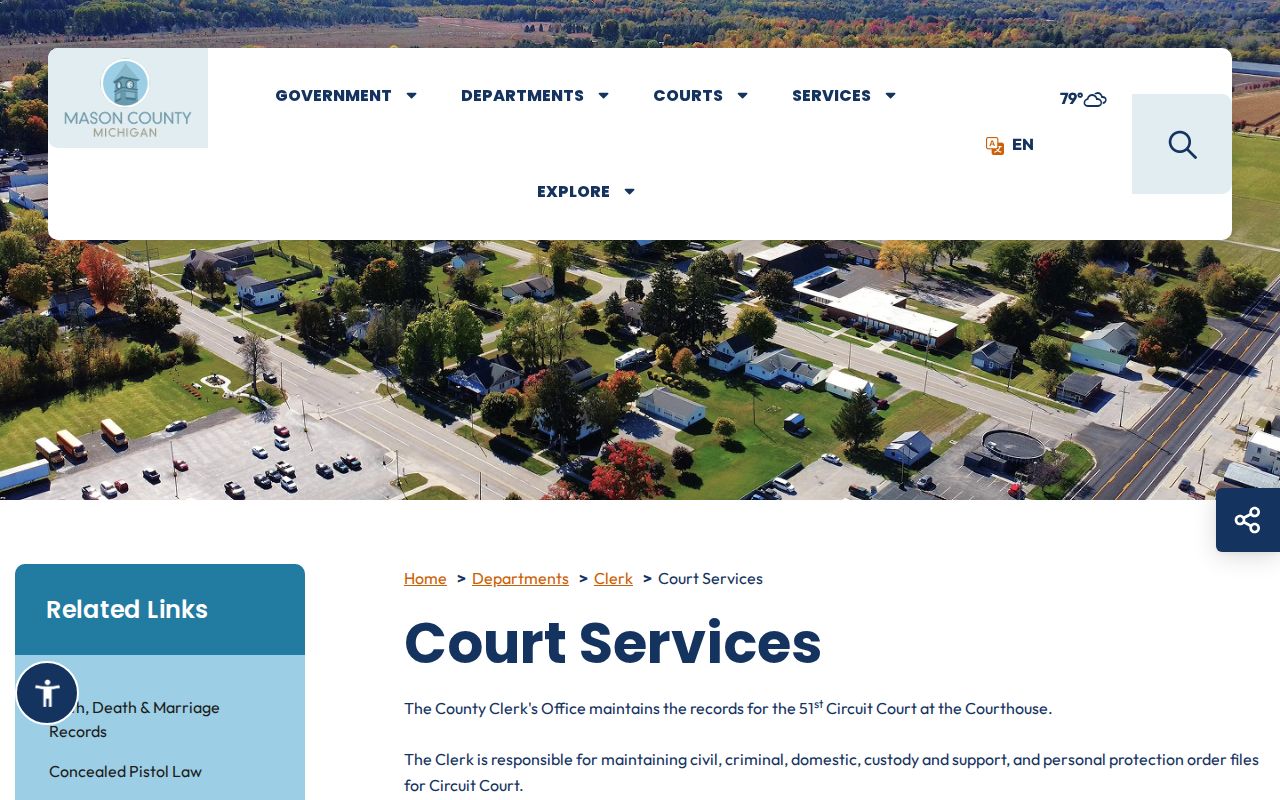
That county example shows why a statewide result must route to the office that maintains the Michigan court record and issues certified copies.
| MiCOURT Field | Type | Required | Use |
|---|---|---|---|
| Court | Selector | Yes | Choose a participating trial court. |
| Terms and CAPTCHA | Confirmation | Yes | Complete before search access. |
| Party name | Text | One method | Search by name as the route permits. |
| Case number | Text | One method | Most precise when the court format is known. |
| Limiting filters | Filters | No | Labels vary by court and case type. |
The Michigan Court Records System
The Michigan Supreme Court is the court of last resort. Its seven justices handle discretionary review in most matters, exercise limited original jurisdiction, make court rules, oversee attorney discipline, and hold general superintending control. The Michigan Court of Appeals has 25 judges elected in four districts and normally sits in three-judge panels. It hears appeals of right and applications for leave from Circuit Court and certain agency decisions. The State Court Administrative Office supports statewide administration, forms, statistics, standards, and trial-court oversight.
Trial records are divided among three main local courts. Circuit Court has general jurisdiction. District Court handles limited civil, landlord-tenant, small-claims, misdemeanor, most traffic, and early felony matters. Probate Court handles estates, wills, trusts, guardianships, conservatorships, and mental-health proceedings. Michigan also retains four Municipal Courts in the Grosse Pointe communities. The Court of Claims, housed in the Court of Appeals, hears claims against the state.
The Mason County courts page shows how one county presents Circuit, District, and Probate routes alongside related offices.
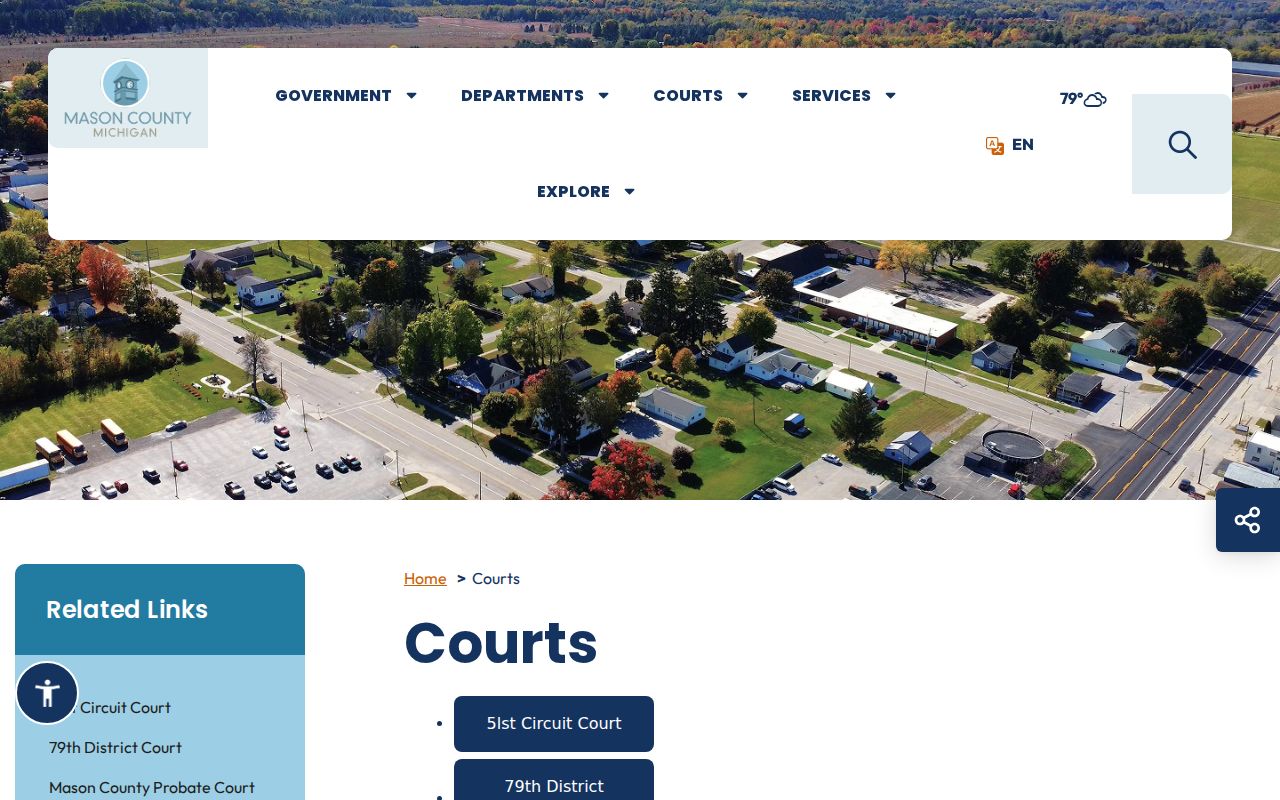
The example reflects Michigan's three-court trial structure without turning one county's offices into a statewide substitute.
Typical appeal path: District or Municipal Court › Circuit Court › Michigan Court of Appeals › Michigan Supreme Court. Specialized routes can differ.
| Court | Jurisdiction | Case Types |
|---|---|---|
| Michigan Supreme Court | Final state review | Leave applications, constitutional issues, discipline |
| Michigan Court of Appeals | Intermediate review | Circuit judgments and agency appeals |
| Circuit Court | General trial jurisdiction | Felonies, higher-value civil, domestic and juvenile matters |
| District Court | Limited trial jurisdiction | Misdemeanors, traffic, landlord-tenant, small claims, felony preliminaries |
| Probate Court | Specialized jurisdiction | Estates, guardianships, conservatorships, trusts, mental health |
| Municipal Court | Four-city local jurisdiction | Ordinance, traffic, and limited civil or criminal matters |
The representative Circuit Court source documents a general-jurisdiction court serving a multicounty circuit.
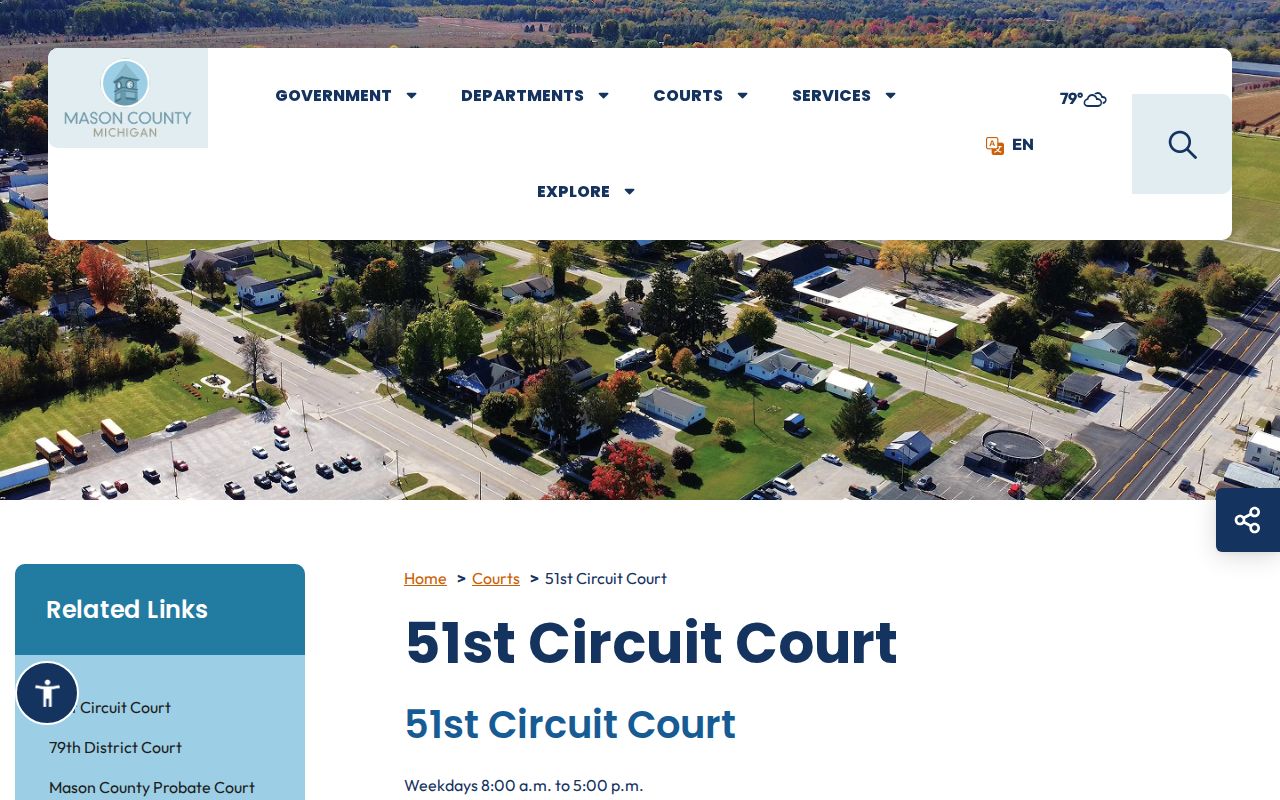
A circuit may share judges across counties while files remain tied to the correct county and court.
The representative District Court source identifies traffic, civil, landlord-tenant, small-claims, misdemeanor, and felony-preliminary work.
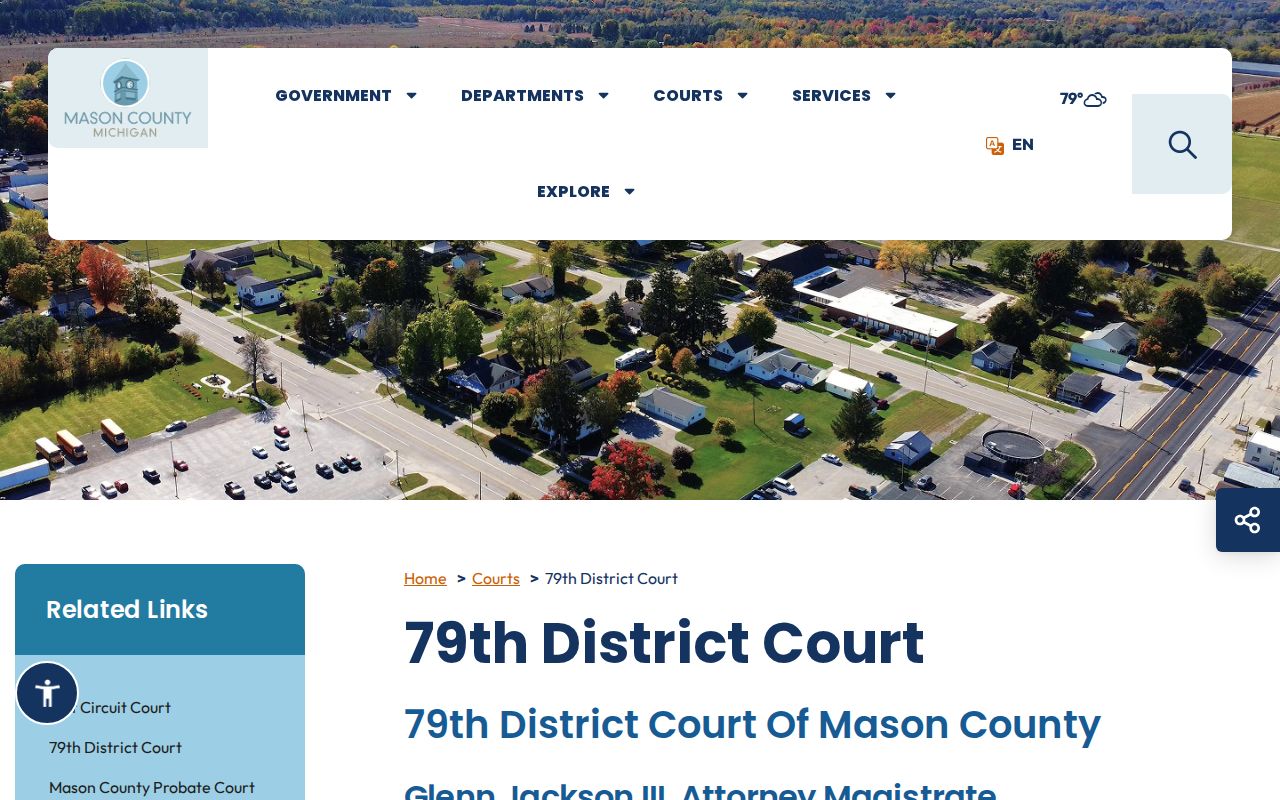
This lower-court scope explains why the District Court clerk may be the correct Michigan record custodian.
Michigan Court Record Types
Michigan court records follow both subject and court level. Circuit civil files can contain complaints, summonses, answers, motions, service proofs, judgments, garnishments, and satisfactions. District civil files cover claims through $25,000. Small claims are money-only disputes through $7,000, while landlord-tenant proceedings can include possession complaints, notices, hearings, judgments, and writs. Criminal felonies split between District Court's early stage and Circuit Court after bindover. Misdemeanors generally remain in District or Municipal Court.
- Criminal: complaint, warrant, bond, information, motions, plea or trial, disposition, sentence, and appeal.
- Civil: complaints, responses, orders, judgments, garnishments, and satisfactions at district or circuit level.
- Domestic: divorce, custody, support, parenting-time, and paternity files in Circuit Court Family Division.
- Traffic: citation, hearing, responsibility finding, fines, costs, payments, and failure-to-appear events.
- Probate: estates, wills after death, inventories, accounts, fiduciary appointments, guardianships, and trusts.
- Appeals: applications, briefs, lower-record references, orders, opinions, and transcripts.
The representative Probate Court page links register-of-actions access while identifying estate, guardianship, conservatorship, trust, and mental-health jurisdiction.
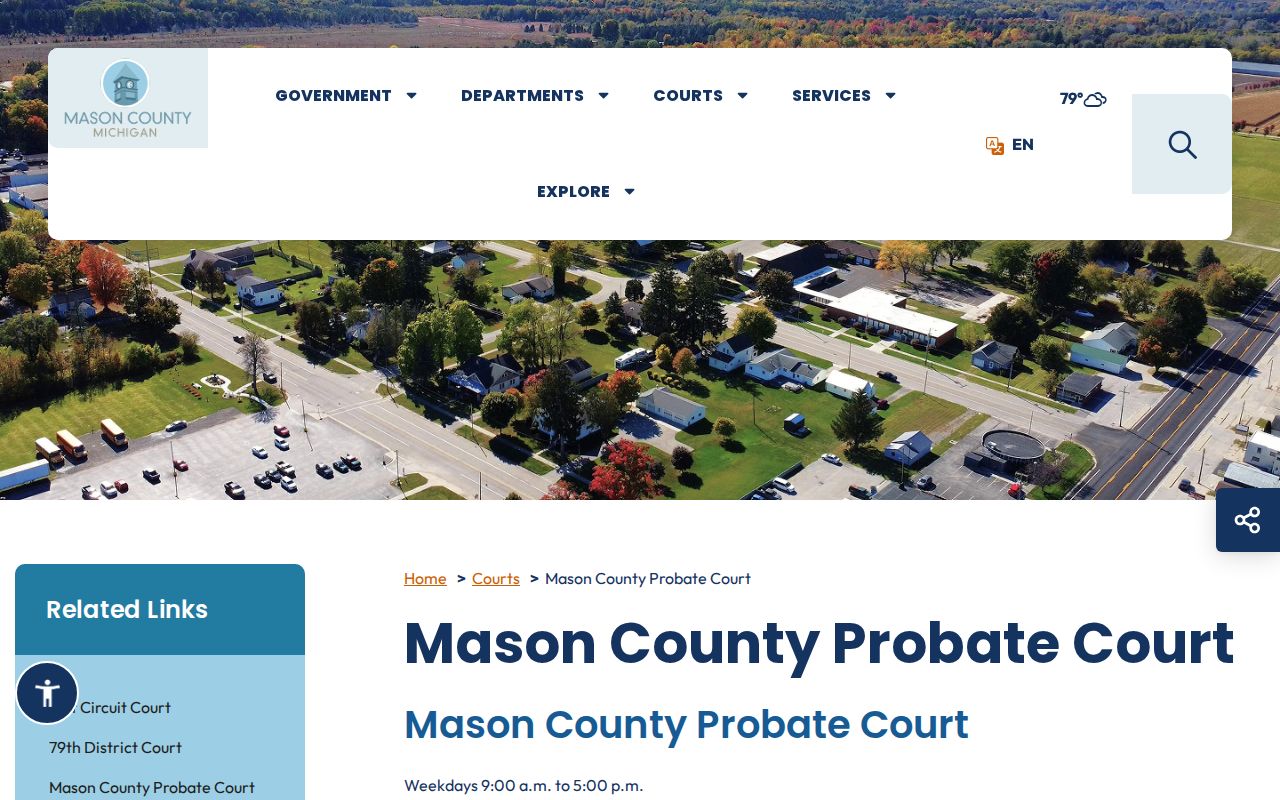
The example shows why open estate records and restricted mental-health material cannot be treated as one public category.
What Michigan Court Records Show
A Michigan public case history may show the caption, case number, court, judge, filing date, status, party roles, attorneys, charge or claim, bond, hearings, register-of-actions entries, disposition, sentence, fines, costs, restitution, and payments. The official file can add pleadings, exhibits, transcripts, confidential information forms, and document images. Online display varies by court. A register of actions is the event index, not a promise that every document can be opened online.
| Field | What It Shows |
|---|---|
| Case number | Year, sequence, and often a case-type suffix |
| Filing date and status | When the matter began and its procedural posture |
| Parties | Plaintiff, defendant, petitioner, respondent, prosecutor, accused, or estate roles |
| Charge or claim | Accusation, statute, or civil nature of the dispute |
| Register of actions | Chronological filings, hearings, orders, and case events |
| Disposition | Outcome of the case or individual charge |
| Sentence or judgment | Penalty, relief, damages, supervision, costs, or restitution |
A case-number suffix can classify a matter but does not reveal its outcome. A charge is an accusation, while a conviction requires a guilty plea or verdict. A disposition describes the result. A bindover transfers a felony from District Court to Circuit Court. Read the status, disposition, and signed final order together.
Michigan Statewide Record Systems
Several important Michigan records do not live in the trial-court file. The Department of Corrections operates OTIS for prisoners, parolees, probationers, and recent discharges. Michigan State Police provides the ICHAT name-based criminal-history service and a public sex-offender registry. The Secretary of State maintains driving records. MDHHS Vital Records issues statewide certified marriage, divorce, and other vital records through its own channels. MiFILE is court filing infrastructure for enabled courts, not a substitute for public MiCOURT searching.
| System | What It Holds | Run By |
|---|---|---|
| OTIS | MDOC custody, supervision, and recent discharge information | Michigan Department of Corrections |
| ICHAT | Public name-based Michigan criminal history within repository scope | Michigan State Police |
| Driving record | Driving history, points, license action, and eligible requests | Michigan Secretary of State |
| Vital Records | Certified marriage, divorce, and other vital records | Michigan MDHHS |
| Sex Offender Registry | Public registration profiles within statutory limits | Michigan State Police |
The official OTIS search is the state corrections source and does not include people held only in county jails.
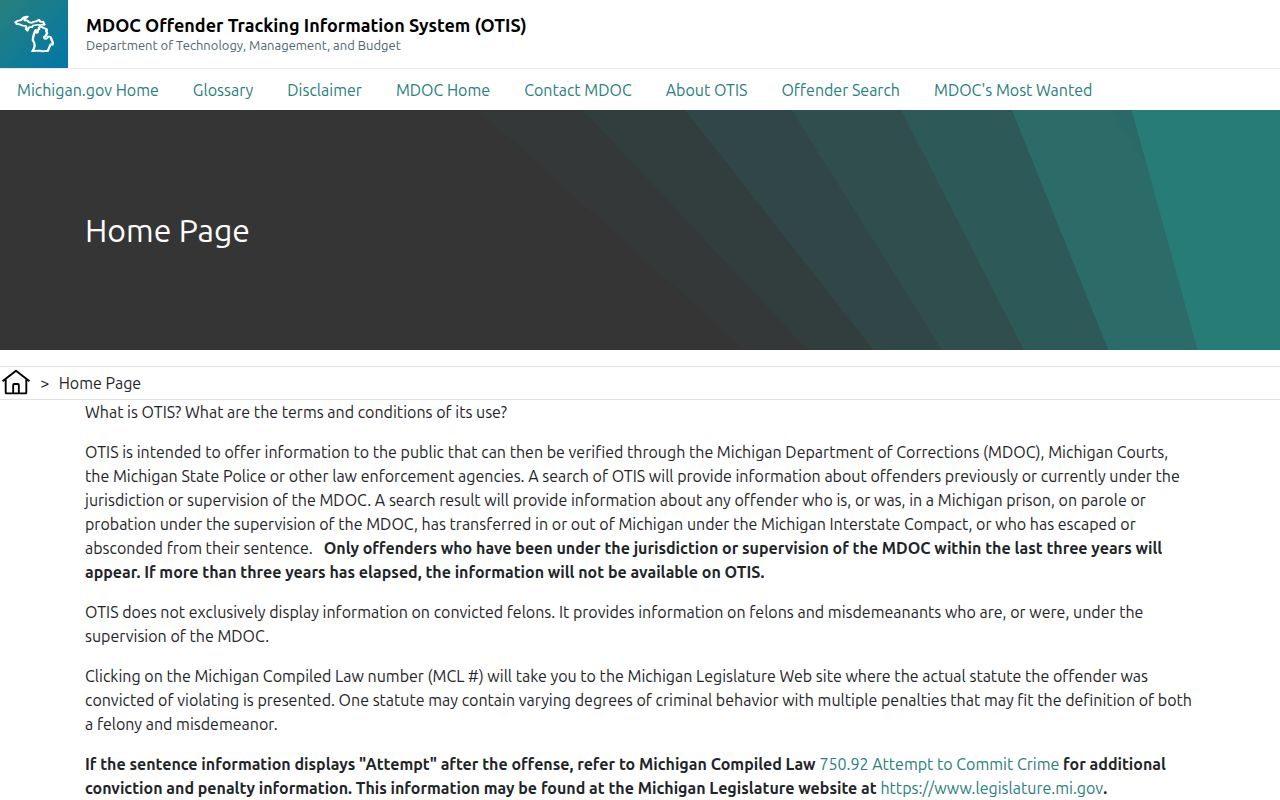
Custody or supervision data should not be mistaken for a complete court case file or local jail roster.
The Michigan driving-record service maintains a file distinct from the District or Municipal Court traffic case.
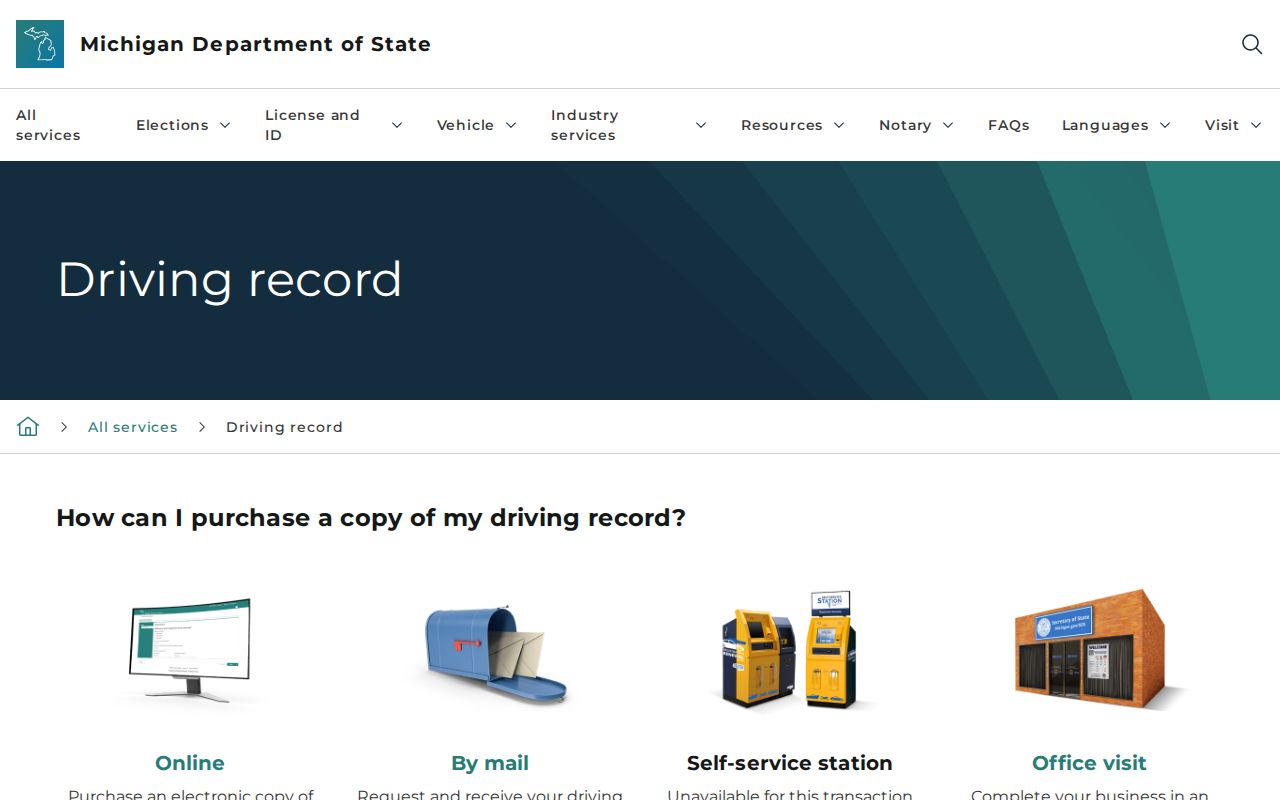
The court file shows citation events, while the driving record reflects license status, convictions, points, and related state action.
The MDHHS Vital Records office supplies the statewide certified-record route.
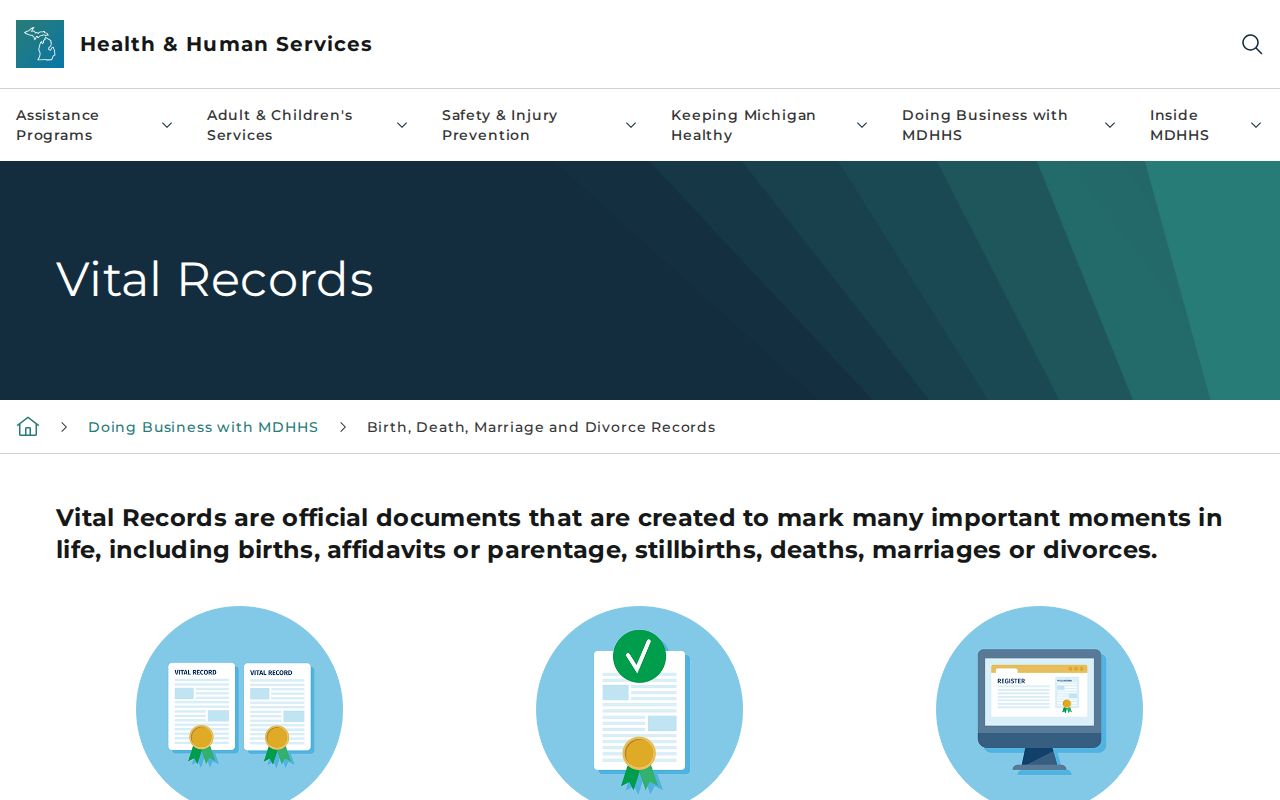
The original marriage license remains a county record, and the full divorce case remains with the Circuit Court clerk.
Michigan Court Record Custodians
Michigan has a split clerk structure. The elected County Clerk, serving a four-year term, acts as Clerk of the Circuit Court. That office maintains Circuit civil, felony, domestic-relations, Family Division, personal protection, and appellate files. District Court clerks maintain district civil, landlord-tenant, small-claims, traffic, misdemeanor, and felony-preliminary records. Probate Registers perform the clerk function for estates, wills, guardianships, conservatorships, trusts, and mental-health matters.
The representative Mason County Clerk page shows both Circuit Court responsibilities and non-court county duties such as vital records and elections.
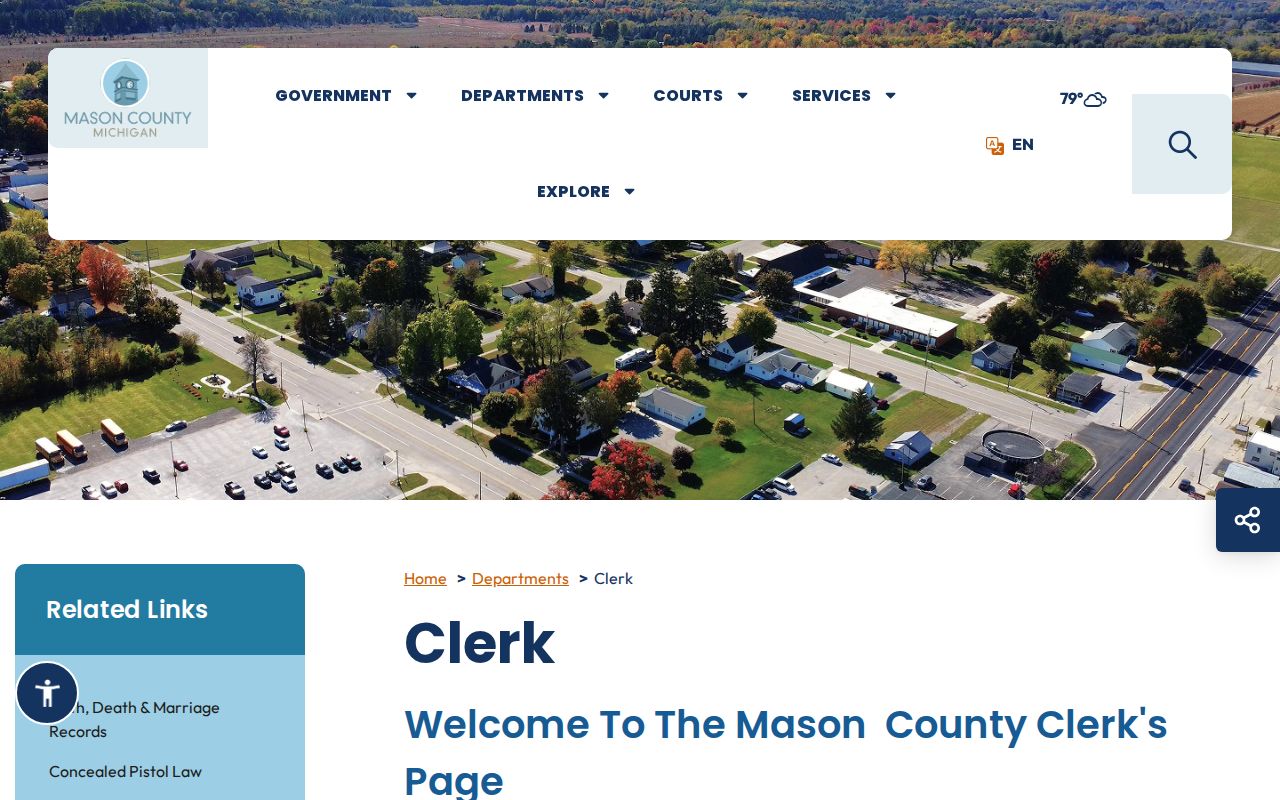
This division warns searchers not to assume that the County Clerk has every District or Probate case simply because offices share a county.
A clear request identifies the court and county, caption and case number, party name and approximate year if the number is unknown, exact document title and filing date, desired copy type, delivery method, and maximum approved cost. Public inspection normally needs no ID. Restricted records and party-only access can require proof of identity or authority. Older files may need advance retrieval.
Michigan Court Records Access Laws
Michigan judicial case files are governed chiefly by court rules and the judiciary's authority. MCR 8.119(H)-(J) permits inspection of public case records unless law, rule, or court order restricts access. Inspection and public case-history retrieval cannot be charged. A court may recover actual reproduction costs under its local administrative order and does not have to compile a new record. Executive and local agency records follow Michigan FOIA instead, so a sheriff, MDOC, MSP, SOS, or MDHHS request uses a different channel.
Key Michigan authorities:
MCR 8.119(H)-(J) governs court-record inspection, retrieval, maintenance, and reproduction charges.
Michigan FOIA, MCL 15.231 et seq. covers public-body records but is not the ordinary route for case files.
MCL 780.621 sets routes and eligibility rules for conviction set-aside applications.
MCL 712A.28 limits juvenile record access and disclosure.
Protected personal data includes full Social Security and financial-account numbers, driver license or state ID numbers, and other information designated by MCR 1.109. Public documents filed or issued on or after April 1, 2022 must be redacted as required. Older imported electronic documents can remain blocked from remote access pending redaction even when permitted inspection must be accommodated.
Restricted Michigan Court Records
Michigan restricts juvenile, adoption, mental-health, confidential-marriage, deposited-will, sealed, and set-aside material. Personal identifying information is redacted rather than treated as a public search field. MiCOURT also excludes name changes, personal protection matters and violations, extreme-risk protection orders, child-protective cases, and other protected categories from public display. Portal absence does not prove that no file exists. A party, lawyer, authorized agency, or person with a court order may have access the public lacks.
Michigan commonly calls expungement “setting aside.” Application cases are filed in the court of conviction with approved forms and required supporting steps. Automatic relief follows separate Clean Slate processes. A granted set-aside does not physically destroy every government record. It makes the conviction nonpublic for most purposes while preserving statutory access. Errors may require work with Michigan State Police and the sentencing court.
Find Michigan Court Records by County
Local filing and custody make the county the key routing fact. Wayne, Oakland, Macomb, Kent, Genesee, and Washtenaw are Michigan's six featured population centers in the research ordering. Their Circuit and District structures differ, yet the same rule applies statewide: use the county where the case was filed, then identify the court level and custodian.
The Mason County government homepage is a representative example of the local gateway from general county navigation to courts and clerk services.
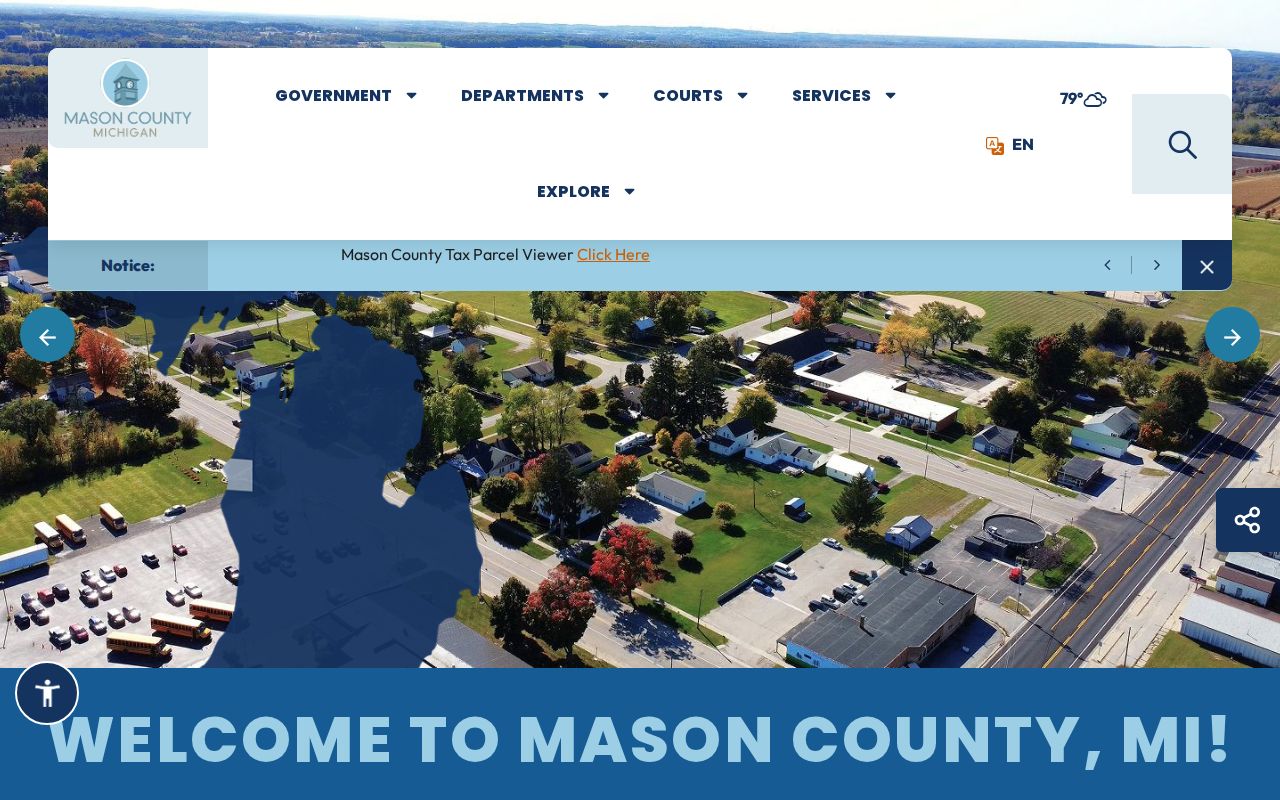
Each county card below opens its own dedicated Michigan court-record destination rather than treating one county portal as statewide coverage.
Wayne County
Detroit · Largest concentration of Circuit, District, Municipal, and federal court activity
Oakland County
Pontiac · Large Sixth Circuit and multiple District Court jurisdictions
Macomb County
Mount Clemens · Sixteenth Circuit and numerous District Court divisions
Kent County
Grand Rapids · Seventeenth Circuit and Western District federal courthouse presence
Genesee County
Flint · Seventh Circuit and multiple District Courts
Washtenaw County
Ann Arbor · Twenty-Second Circuit and major District Court caseloads
Browse the full directory of all 83 Michigan counties to open the court records site for any county.
Michigan Court Records Fees
Inspection and retrieval of a public Michigan court record carry no fee under MCR 8.119(J)(1). Copies follow actual reproduction costs and local administrative orders. Certification, postage, media, archive work, transcripts, and exemplification can increase the total. Filing and agency fees differ by service. Always request the current schedule because local reproduction rules and statewide assessments can change.
| Item | Amount |
|---|---|
| Inspect or retrieve public court history | No fee |
| Court copy | Actual reproduction or local administrative-order rate |
| Michigan marriage license | $20 for residents; $30 when both applicants are nonresidents |
| MDHHS certified marriage or divorce search | $34 including one found certified copy |
| Michigan driving record | $15, plus $1 for certification |
Fee-waiver requests use SCAO-approved forms and require financial facts for judicial review under MCR 2.002. Service, certification, publication, convenience, and local copy charges can make final costs county-specific. Quote the responsible clerk or agency before payment.
Interpret Michigan Court Records
Read a Michigan record in sequence. A complaint begins a case. A motion asks for a ruling, while an order states the court's decision. A charge is an accusation. A plea is the defendant's formal answer, and a conviction is a guilty adjudication by plea or verdict. “Disposition” means the outcome of the case or charge. Multiple counts can end differently. A register of actions lists events but does not supply the full text of each filing.
- Bindover
- Transfer of a felony from District Court to Circuit Court after the preliminary stage.
- Continuance
- Postponement of a hearing, not a final result.
- Personal recognizance
- Release based on a promise and conditions without upfront money.
- Set aside
- Michigan relief that makes an eligible conviction nonpublic for most purposes.
Review the current status, each charge's disposition, and the signed final order or judgment. Financial entries may continue after disposition because costs, restitution, or payments remain active. An appeal creates its own docket and does not erase the trial record.
Michigan Court Record Changes
Since July 2, 2024, MCR 8.119 makes the originating District or Municipal Court record nonpublic after felony bindover and treats transmitted material as part of the public Circuit Court record. If a case is remanded, the public-record location changes again. This rule prevents duplicate public files but makes procedural stage central to a current search.
MiFILE and centralized document management continue to expand through enabled courts, while public image visibility remains court-specific. Clean Slate processing can remove eligible convictions from public view without implying data loss. Problem-solving courts create treatment, sobriety, mental-health, veterans, and other specialized events within ordinary files. Confirm current details with the court that maintains the record.
Note: Confirm names, outcomes, hearing dates, balances, and document terms with the Michigan court that maintains the official record.
Michigan Court Records Questions
Does MiCOURT include every Michigan case?
No. MiCOURT covers participating trial courts, and display varies by court and case type. Protected categories are excluded. Older cases and document images may require the clerk. Appellate records use separate judiciary resources, while federal records use PACER.
Which Michigan clerk has the file?
The County Clerk holds Circuit Court records. A District Court clerk holds district civil, traffic, misdemeanor, and felony-preliminary files. The Probate Register handles probate matters. Match county, court level, case type, and procedural stage.
Is a MiCOURT result an official record?
No. The portal is an informational public history. The court-maintained file is official. Ask the proper office for a certified copy when formal proof is required.
Can the public inspect Michigan court records for free?
Inspection and retrieval of public case history cannot be charged under MCR 8.119. Reproduction, certification, transcripts, archive retrieval, exemplification, and postage may cost money.
Why did a felony record move?
A felony starts in District Court. After bindover, the public file shifts to Circuit Court under the current rule, with transmitted material treated as part of that Circuit file.
Are court files and criminal histories the same?
No. A court file documents one prosecution. Michigan State Police ICHAT compiles reportable statewide criminal-history submissions within its scope and excludes several categories.