
Michigan Criminal Court Records
A criminal court record is the official file created after an accusation is filed in court. In Michigan, District Court handles misdemeanors and the early stages of felony cases. Those felony stages include arraignment, a probable-cause conference, and a preliminary examination or waiver. If the case is bound over, the prosecutor files an information in Circuit Court, where final felony adjudication occurs. The District Court Clerk holds the district file. The County Clerk, acting as Clerk of the Circuit Court, holds the circuit file. A felony may therefore have linked records at both levels.
The file is broader than an arrest entry. It can include the complaint or information, bond terms, motions, hearing notices, proofs of service, orders, plea papers, verdict, sentencing documents, restitution, probation terms, and appellate filings. Online history often shows only the register of actions, which is the date-ordered index of case events. Document images, exhibits, and certified copies may require a request to the clerk. Michigan also treats custody data as a different system, so a court file does not prove where a person is now held.
Search Michigan Criminal Court Records
MiCOURT Case Search provides public history for participating Michigan trial courts. Coverage, exclusions, court selection, and date filters apply. A missing result does not establish that no case exists. Older records, excluded case types, restricted files, and courts outside a given search route can require direct clerk contact. Start with the county of prosecution because that county identifies the District or Circuit Court that owns the official record.
- Open MiCOURT and accept its search terms. Select the county and the likely trial court.
- Search by defendant name or exact case number. Use identifiers to avoid a false name match.
- Open the result and read each charge, register-of-actions entry, disposition, and linked case.
- Confirm key facts with the clerk. Ask which documents are public and whether the file is electronic, paper, or archived.
- Request the named order, judgment, or certified copy from that clerk.
The Michigan county directory is the fallback when MiCOURT does not return the needed case. Give the clerk the case number if known, the defendant's full name, an approximate filing date, and the document sought. Inspection and retrieval of public court records are free, while copies may carry actual or locally authorized costs. Requests for court case files proceed under Michigan court rules, not through a generic Freedom of Information Act demand.
Michigan Criminal Case Stages
Michigan felony records reflect movement from District Court to Circuit Court. Misdemeanors generally stay in District Court. The entries below show why a single charge can produce several hearings and, for a felony, two linked case records. Dates can change through continuances, so the latest signed order and current register of actions control.
Case flow: Charges Filed › Arraignment › Pretrial / Motions › Plea or Trial › Disposition › Sentencing
| Stage | What Happens |
|---|---|
| Arraignment | The court states the charge and rights, addresses a plea where applicable, and sets release or bond conditions. |
| Probable cause and bindover | For a felony, District Court holds the conference and preliminary examination or records a waiver before Circuit Court transfer. |
| Pretrial and motions | Parties litigate evidence, discovery, scheduling, and other issues through motions and orders. |
| Plea or trial | A plea may resolve one or more counts, or a judge or jury returns a verdict. |
| Disposition and sentence | The record states each charge outcome and any custody, probation, financial, or restitution terms. |
What Michigan Criminal Records Show
Michigan public case histories use court-specific formatting, yet common fields make the record readable across counties. A number with a year, sequence, and case-type suffix identifies the file, but the suffix never proves the outcome. Check the disposition for each count and the latest event before drawing a conclusion.
| Field | What It Shows |
|---|---|
| Case number and court | Identifies the District or Circuit Court file and can connect a bound-over felony to another case. |
| Defendant and counsel | Names the accused, party role, and attorneys; protected identifiers are redacted. |
| Charge and statute | Lists each alleged offense, statutory citation, level, and amendment when shown. |
| Bond and hearings | Shows release terms and appearances, often with judge and event type. |
| Plea and disposition | States the formal answer and result for each charge, including dismissal, acquittal, or conviction. |
| Sentence and finances | Can show incarceration, probation, fines, costs, restitution, payments, and related orders. |
Michigan Charges and Convictions
A charge is an accusation. It is not a finding of guilt. Michigan criminal court records may list several counts with different outcomes, including amendment, dismissal, acquittal, or conviction by plea or verdict. Read at charge level rather than treating the case caption as its result. “Pending” is not guilt, and “dismissed” does not mean the public file was set aside.
| Charge | Conviction | |
|---|---|---|
| Stage | Accusation | Verdict or plea |
| Burden of Proof | Probable cause | Beyond reasonable doubt |
| Record meaning | Shows what was alleged | Shows a guilty adjudication |
Read Michigan Criminal Dispositions
Disposition means the procedural outcome of a case or charge. A guilty plea or verdict supports a conviction. An acquittal means the factfinder did not convict. A dismissal with prejudice bars refiling of that claim, while a dismissal without prejudice may allow it. Nolle prosequi describes a prosecutor's decision not to continue a charge, subject to law. Sentence is separate from disposition and states the penalty imposed after conviction.
Michigan does not use one simple statewide letter class for every misdemeanor. Offense-specific statutes control penalties, while felony sentencing uses statutory maximums and guideline scoring. Read the signed judgment of sentence when exact custody, probation, restitution, or financial terms matter. Online summaries can omit conditions and later amendments.
Michigan Sealed and Set-Aside Records
Michigan commonly calls expungement “setting aside.” Sealing and setting aside are not the same as physical destruction. A seal restricts access under law or court order. An eligible conviction that is set aside becomes nonpublic for most purposes but remains available for statutory uses. Application-based relief is filed in the court of conviction and can require an approved form, certified conviction material, fingerprints, MSP processing, notice, and a hearing. Some relief may be automatic. Eligibility and excluded offenses depend on the governing law, so a missing portal entry cannot establish that relief occurred.
| Sealed | Expunged | |
|---|---|---|
| Public visibility | Restricted as the order or law directs | Eligible conviction becomes nonpublic for most purposes |
| Government record | May remain available to authorized users | Retained for uses allowed by statute |
| Michigan route | Court order or confidentiality rule | Automatic or application-based set-aside process |
Access Michigan Criminal Court Records
Michigan Court Rule 8.119 governs clerk maintenance, inspection, and reproduction of court records. Public case records may be inspected unless a law, court rule, or order restricts access. Retrieval and inspection carry no fee, though actual reproduction and locally authorized copy costs may apply. Michigan FOIA covers records of public bodies, but judicial case files are requested from the clerk under court rules. Ask for an existing document by case number and title.
Key authorities:
MCR 8.119(H)-(J) governs public inspection and copying of Michigan court files.
Michigan FOIA, MCL 15.231 et seq. applies to agency records, not as the main route to a judicial case file.
A representative county prosecutor's criminal proceedings resource illustrates how local charging work enters Michigan trial courts.
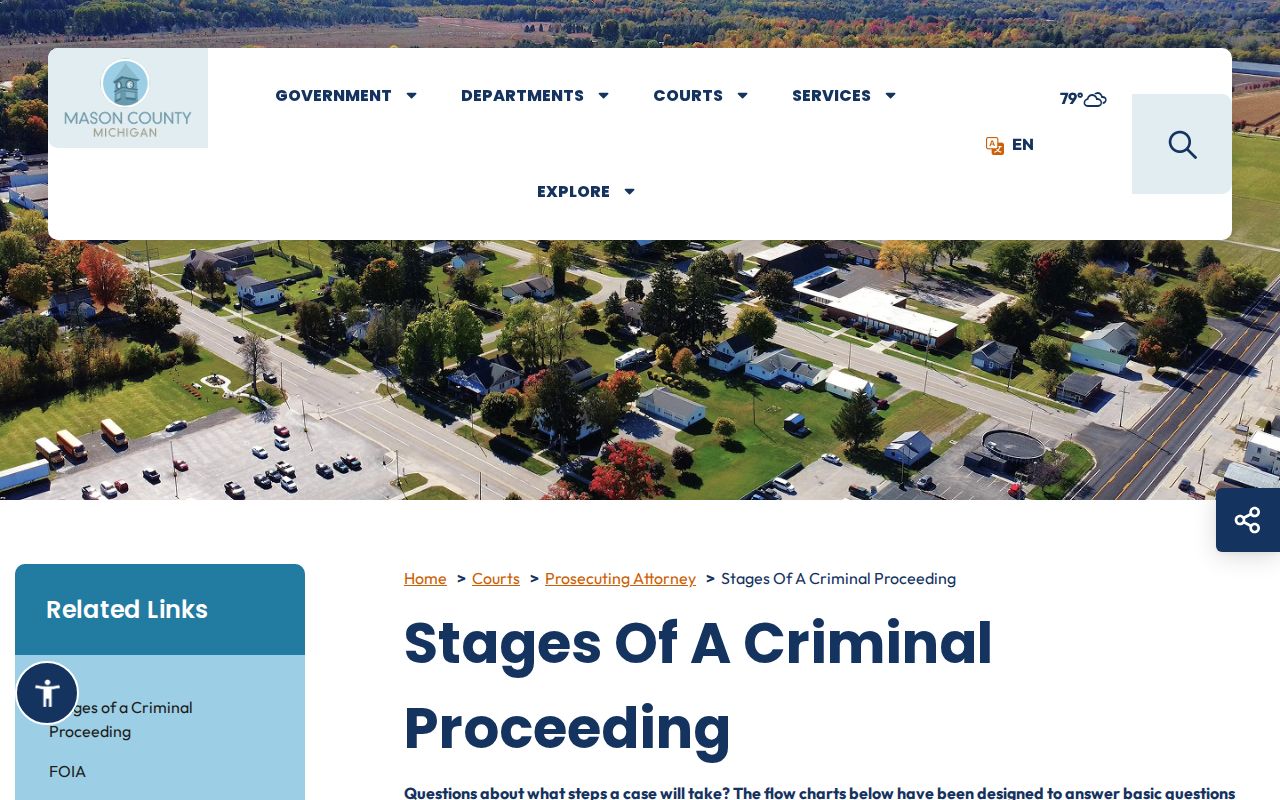
The example is local, not a statewide portal. It shows why the county of prosecution controls access to the underlying criminal case file.
Michigan Statewide Criminal History
The Michigan State Police criminal-history repository is distinct from a court file. ICHAT, the Internet Criminal History Access Tool, returns public name-based Michigan history within its repository scope. Michigan requires reporting of felonies and serious misdemeanors punishable by more than 93 days from law enforcement, prosecutors, and courts across all 83 counties. ICHAT can include arrests, charges, and dispositions, but it excludes warrants, traffic, juvenile, federal, tribal, out-of-state, suppressed, and local minor-misdemeanor data. It is not a certified copy of each prosecution file.
Search inputs include last, first, and middle names, aliases, date of birth, race, and sex. Account and payment rules apply unless statutory free access is available. A name match is not identity proof. Authorized fingerprint-based checks are more reliable. To dispute a result, compare the entry with the sentencing court and use MSP correction procedures because courts submit judicial dispositions.
Important: Formal employment, housing, or credit screening must follow the Fair Credit Reporting Act and other consent and notice rules.
Restricted Michigan Criminal Court Records
Michigan restricts juvenile, adoption, mental-health, sealed, and set-aside material, as well as information protected by a specific order. MCL 712A.28 limits access to many juvenile records. Public filings also redact full Social Security and financial-account numbers, driver's-license or state-ID numbers, and other protected identifiers under MCR 1.109. Older imported electronic documents may be blocked from remote view pending redaction even when the court must accommodate lawful inspection.
A redaction hides protected fields. A seal restricts the document or file itself. Parties, counsel, authorized agencies, or a person with a court order can sometimes receive access unavailable to the public. MiCOURT exclusion therefore does not prove that no record exists. Contact the sentencing clerk to learn whether a public copy can be produced and what proof of authority is required.
Note: Michigan clerks, not a statewide portal, control certified documents and apply the access restrictions governing each local criminal case file.